Is a Grand Piano Worth the Investment?
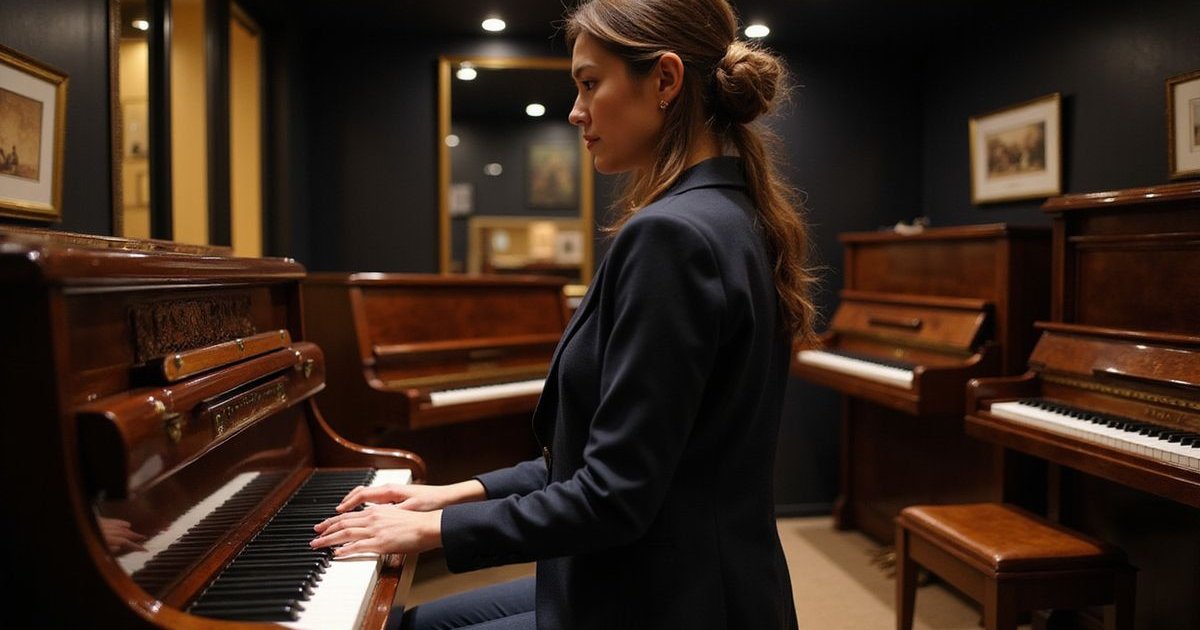
The question “Is a Grand Piano Worth the Investment?” surfaces daily in our showroom. It represents a significant financial commitment—often exceeding £15,000—and requires careful consideration.
We want to offer an honest assessment based on decades of experience in the UK piano market.
Many buyers assume a grand piano is automatically superior to an upright, but the reality is more nuanced.
Our team has seen £10,000 spent on a mediocre grand that sounded worse than a premium upright at half the price.
This guide analyzes the specific technical advantages, the real-world ownership costs in 2026, and the practical alternatives you should consider.
What a Grand Piano Offers
Before you weigh the financial investment, it is vital to understand the mechanical differences that justify the cost.
Superior Sound Projection
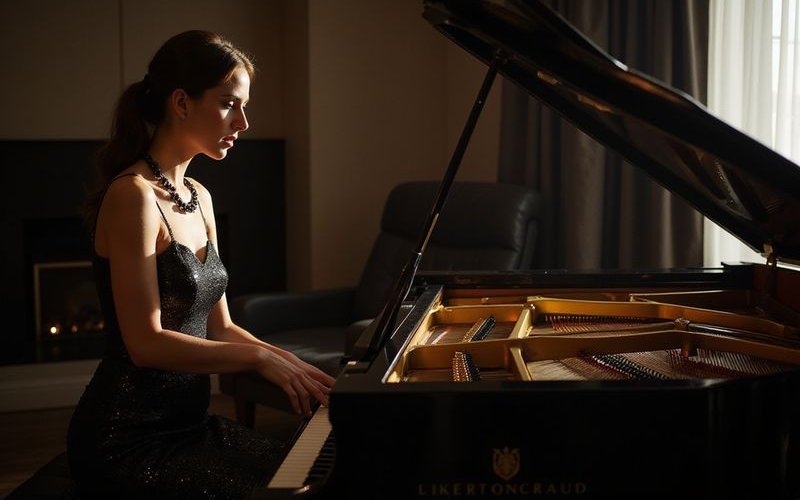
Grand pianos produce a sound that is fundamentally different from vertical instruments. Because the soundboard sits horizontally, the audio waves project upward and outward into the room without obstruction.
We find that this setup allows for a more complex “bloom” in the tone.
Longer strings in models above 160cm (5’3”) generate significantly less inharmonicity—a form of distortion common in shorter strings. This results in a bass register that sounds deep and clear rather than “tubby” or muddy.
The Double Escapement Action
The most tangible benefit for a player is the action mechanism. Grand pianos utilize a gravity-assisted repetition lever known as the double escapement.
This mechanism allows the hammer to restrike the string before the key fully returns to its resting position.
Standard uprights rely on springs and typically cap out at about 7 repetitions per second. A well-regulated grand action can handle up to 14 repetitions per second. For advanced repertoire involving fast trills or repeating notes, this mechanical advantage is non-negotiable.
Visual Statement
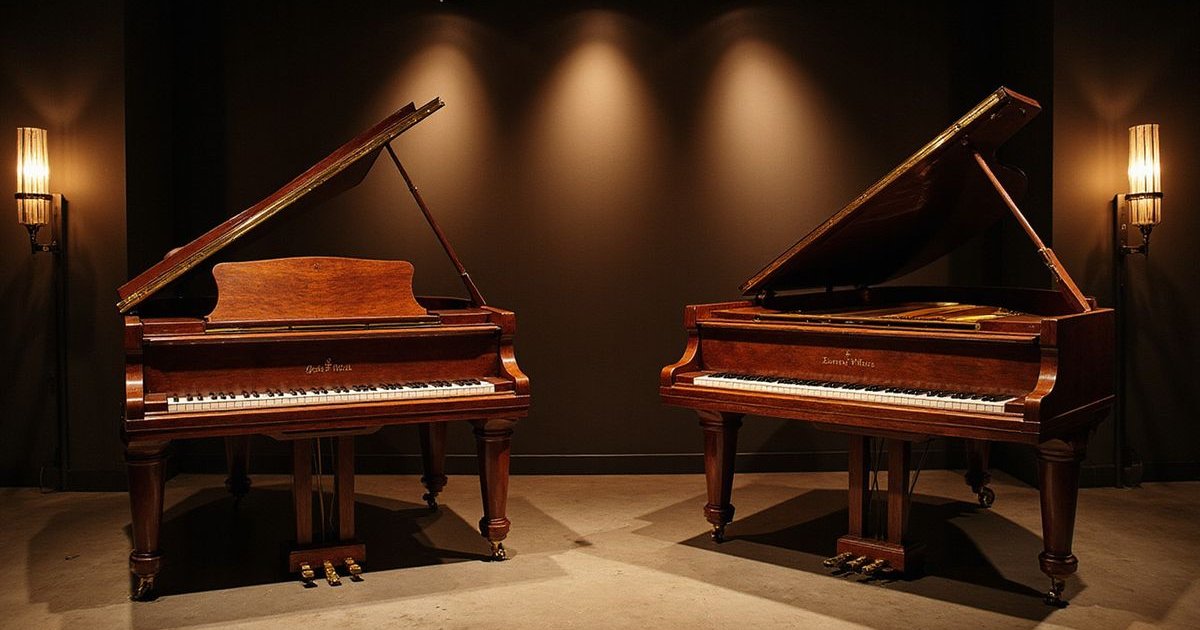
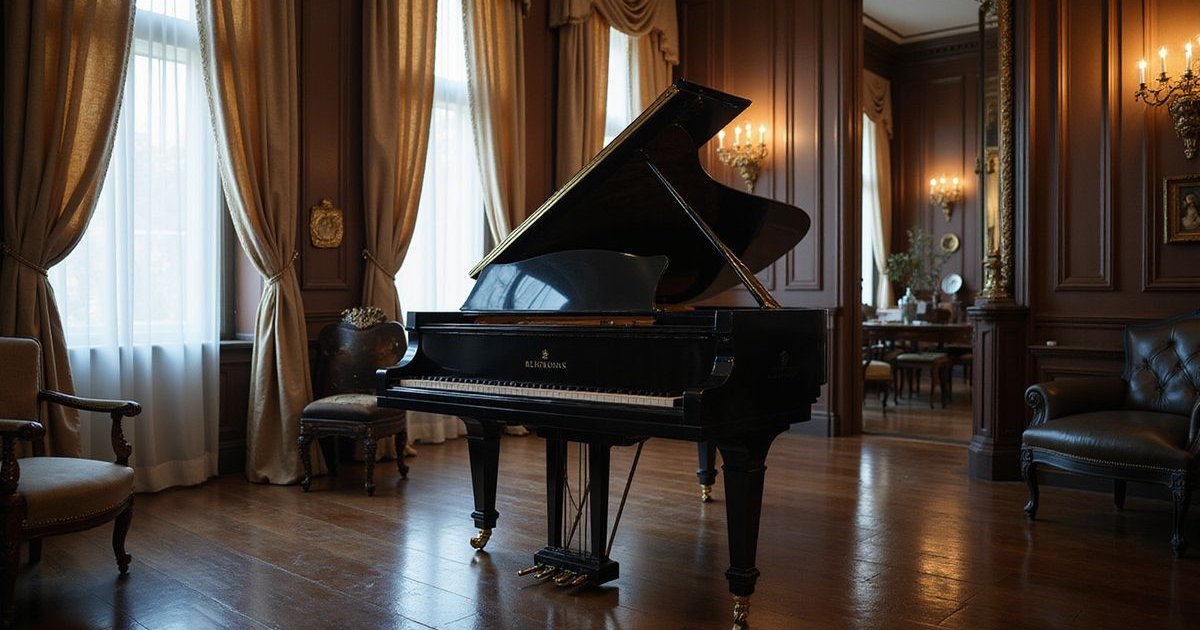
There is no denying the command a grand piano holds over a room. The curved rim and raised lid create a sculptural presence that anchors interior design.
Our clients often cite this aesthetic value as a primary factor in their decision.
A high-gloss polyester finish on a black grand remains the gold standard for elegance in British homes.
Long-Term Value Retention
Quality instruments from reputable makers hold their residual value far better than digital alternatives or mass-produced furniture pianos.
Market data from 2025 indicates that premium Japanese and German grands (such as Yamaha C-Series or Kawai GX models) often retain 60-70% of their new value after ten years if maintained correctly.
We see this stability specifically in “heirloom” brands like Steinway, where instruments can sometimes appreciate in nominal value over decades.
The Real Costs of Ownership
Purchase Price Reality
The entry point for a new piano at the grand level has shifted in recent years.
We currently see acceptable entry-level baby grands (like the Kawai GL-10 or Yamaha GB1K) starting between £11,000 and £13,000.
Serious home pianists usually target the “conservatory” standard range. This tier includes models like the Yamaha C3X or Kawai GX-2, which typically command prices between £25,000 and £35,000.
| Piano Tier | Typical UK Price Range (New) | Expected Lifespan |
|---|---|---|
| Entry-Level Baby Grand | £11,000 - £15,000 | 20-30 Years |
| Conservatory / Mid-Range | £20,000 - £40,000 | 40-60 Years |
| Premium / Handcrafted | £60,000 - £150,000+ | 80+ Years (with rebuilding) |
Pre-owned instruments offer a strategic workaround for these costs. A well-maintained 15-year-old Yamaha C3 can often be secured for £15,000 to £18,000.
Ongoing Maintenance Costs
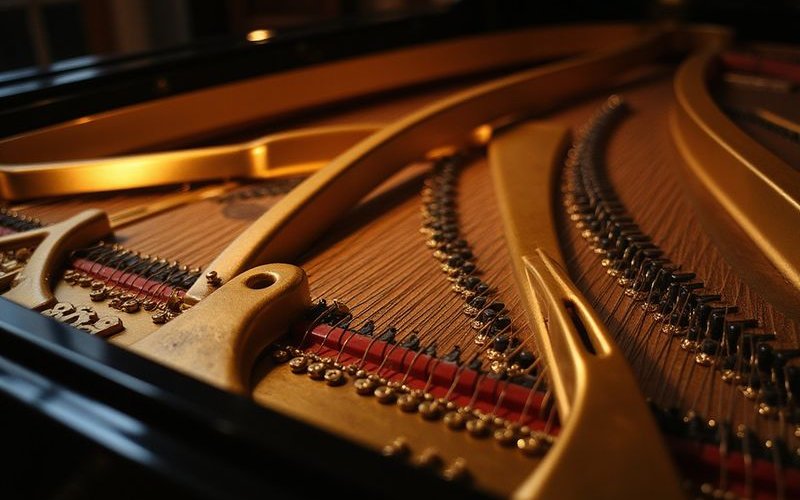
The purchase price is only the beginning of the financial picture. Grand pianos require consistent technical attention to perform at their peak.
Our service logs show that maintenance costs for a grand are generally 20-30% higher than for an upright due to the complexity of the action.
Annual Service Budget:
- Tuning: £160 - £220 (based on two tunings per year).
- Regulation: £300 - £500 every 3-5 years to adjust the action geometry.
- Voicing: £150 - £300 every 3-5 years to maintain tonal quality.
Environmental Control
The UK climate poses a specific threat to piano longevity due to humidity fluctuations.
We strongly advise installing a dedicated humidity control system, such as a Piano Life Saver system.
These systems mount invisibly underneath the soundboard and regulate the micro-climate of the instrument. Installation typically costs between £600 and £800, but it prevents costly soundboard cracks and tuning instability.
Delivery and Logistics
Moving a grand piano is a specialist operation that requires specific equipment and insurance.
Standard ground-floor delivery within the same region usually costs between £300 and £600.
If your property requires a crane hoist or specialized stair equipment (like a PianoPlan robot), costs can escalate to £1,500 or more. You must verify access widths before purchase; a standard grand requires an opening of at least 35cm (without legs) to navigate tight turns.
Who Should Invest in a Grand?
Strong Candidates
Advanced Players: If you are working on diploma-level repertoire (ABRSM Grade 8 and beyond), the physics of an upright action will eventually limit your expression. The grand action is essential for mastering advanced technique.
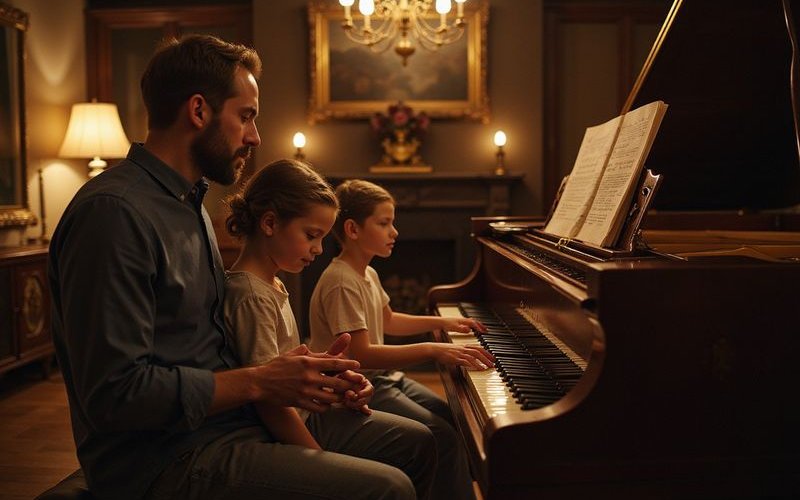
Piano Teachers: We find that teachers who teach on a grand attract more serious students. It allows pupils to learn proper touch and pedal technique that transfers to exam and concert settings.
Acoustics Enthusiasts: Buyers with large rooms (over 4m x 5m) often find that uprights sound “boxed in.” A grand piano fills larger volumes of air more naturally.
Legacy Buyers: Families looking to pass an instrument down through generations will find that a grand piano is a durable asset.
Cases for Caution
Apartment Dwellers: Noise transmission is a major issue in UK flats. A grand piano’s sound travels through floors easily.
The “Silent” Solution: If you live in a flat but need a grand action, we recommend looking for factory-fitted “Silent” models (like Yamaha SH3 or Kawai ATX4). These allow you to play with headphones while retaining the real acoustic action.
Restricted Budgets: A premium upright (like a Yamaha U3 or Kawai K-500) costs around £10,000 - £12,000.
We guarantee that a premium upright at this price point will outperform a cheap entry-level grand in both sound and build quality.
Small Rooms: Placing a 6-foot grand in a 3-meter room creates acoustic chaos. The sound waves cannot develop properly, leading to an overpowering and harsh listening experience.
The Pre-Owned Opportunity
The secondary market transforms the accessibility of grand ownership.
We see instruments depreciate most steeply in their first 5-8 years.
This means a high-tier instrument from 2010 might be available for the same price as a new entry-level model.
The “Grey Market” Factor
When buying pre-owned in the UK, you must be aware of “grey market” imports. These are used pianos imported directly from Japan that were not originally seasoned for the European climate.
While many are excellent, some can suffer from loose tuning pins due to drier British homes.
Pre-Owned Checklist:
- Verify History: Ask if the piano was originally sold in the UK or Europe.
- Check the Soundboard: Use a torch to look for hairline cracks underneath the strings.
- Inspect Hammers: Deep grooves in the felt indicate heavy use and a need for expensive resurfacing or replacement.
- Dealer Warranty: Ensure you get at least a 3-5 year warranty on the structure and action.
An Honest Assessment
Is a grand piano worth it? The answer relies on your specific constraints.
The Verdict: If you have a room larger than 12 square meters and a budget above £15,000, a grand piano offers an unrivaled musical experience. The tactile feedback and sonic depth cannot be replicated.
The Alternative: If you are stretching your budget to buy the cheapest possible grand, stop. A top-tier upright will serve you better musically and financially.
We often remind customers that a grand piano is a lifetime companion. It is better to wait and save for the right one than to compromise on a “piano-shaped object” that disappoints you.
Making the Decision
If you are ready to move forward, we suggest the following steps:
- Audit Your Space: Measure your room and use a floor template to visualize the footprint. Remember to add 1 metre of clearance for the bench.
- Test the Action: Do not just listen to the sound. Play soft, fast passages to test the repetition speed of the keys.
- Compare Side-by-Side: Play a £12,000 upright next to a £12,000 grand. The upright often wins on tone quality at this price point.
- Consider Acoustics: If you have hard floors and glass walls, budget for a rug and acoustic treatment to tame the brightness.
- Think Resale: Stick to major brands (Yamaha, Kawai, Boston, Steinway, Bechstein) for safety in future value.
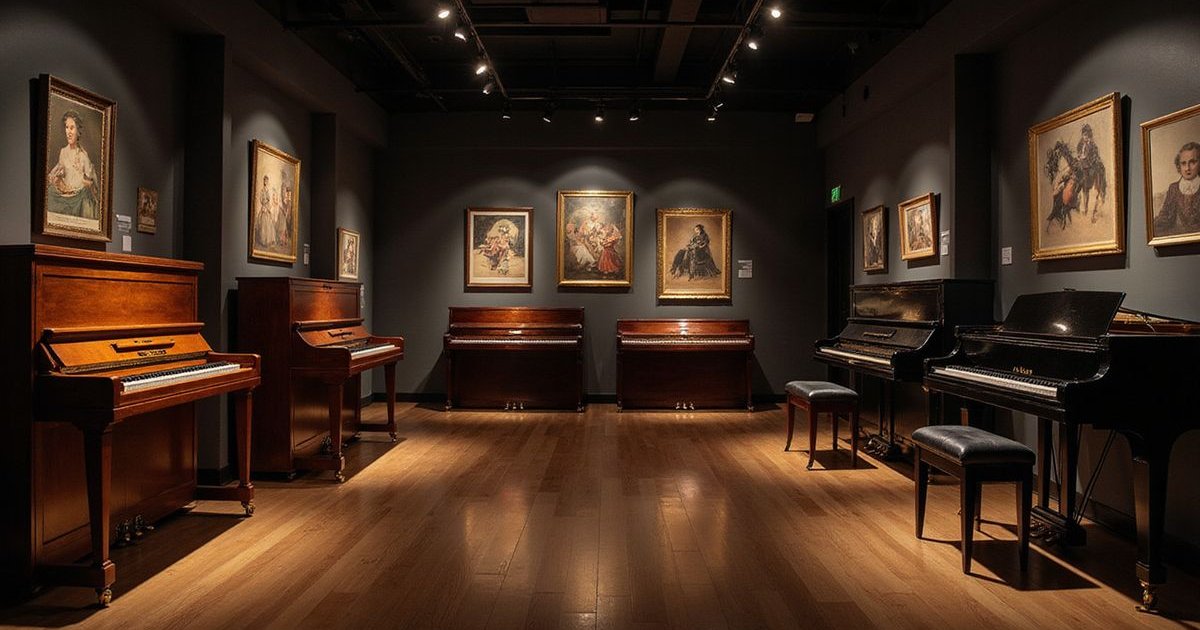
Visit our showroom to test these differences yourself. We stock a wide range of new and pre-owned grands and can guide you toward the instrument that fits your home and your musical goals.
James Whitmore
James Whitmore is a qualified piano technician with over 20 years of experience. He founded Keys & Co. in 2018 to share his passion for helping people find the perfect piano.