Piano Prices: What Should You Expect to Pay in 2026?
One of the most common questions we hear from clients isn’t just about the price tag, but about the long-term value of the instrument. It is a fair concern, especially when you realize that the initial purchase is just the beginning of your journey with a piano.
Let’s break down the 2026 market so you can see exactly where your money goes.
Understanding the Piano Market
The gap between a budget instrument and a concert grand is massive, but most of our customers find their perfect match in a specific “quality tier.” Identifying which tier fits your goals is the first step to avoiding buyer’s remorse.
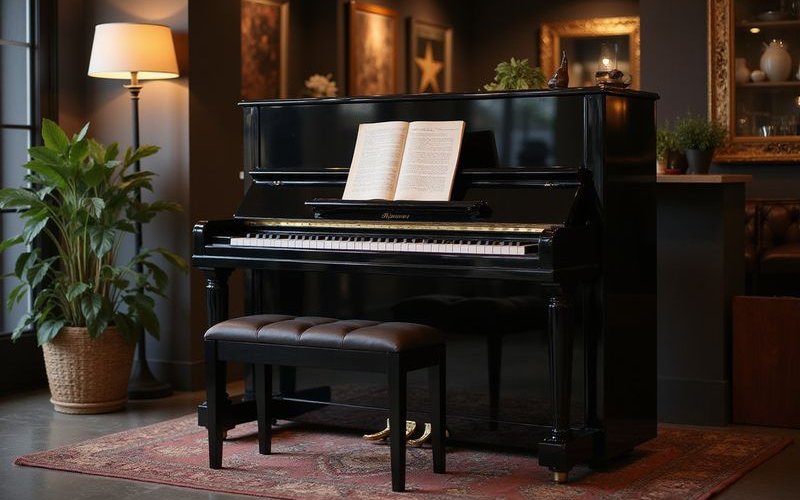
New Piano Prices
Entry-Level Uprights: £2,500 - £4,500
We find that the new piano market has become incredibly competitive in recent years. You will primarily see models like the Yamaha b1 (approx. £4,000) and the Kawai K-15E (approx. £3,150 - £3,500) dominating this space.
These instruments are “honest” workhorses. They offer solid construction using modern materials and consistent quality control that was unheard of in entry-level pianos twenty years ago.
What you get:
- Manufacturer warranties that typically last 5 to 10 years
- Compact designs that fit into smaller UK living rooms
- Reliable actions that are perfect for grades 1-5
What you sacrifice:
- Bass Depth: Cabinets around 109cm-113cm simply cannot produce a deep, resonant bass.
- Cabinet Finish: You often get a simple polyester finish rather than premium wood veneers.
Mid-Range Uprights: £5,000 - £9,000
This is the category where we see the biggest jump in musical quality. The Yamaha U1 (street price approx. £8,300 - £9,500) and the Kawai K-300 are the global benchmarks here.
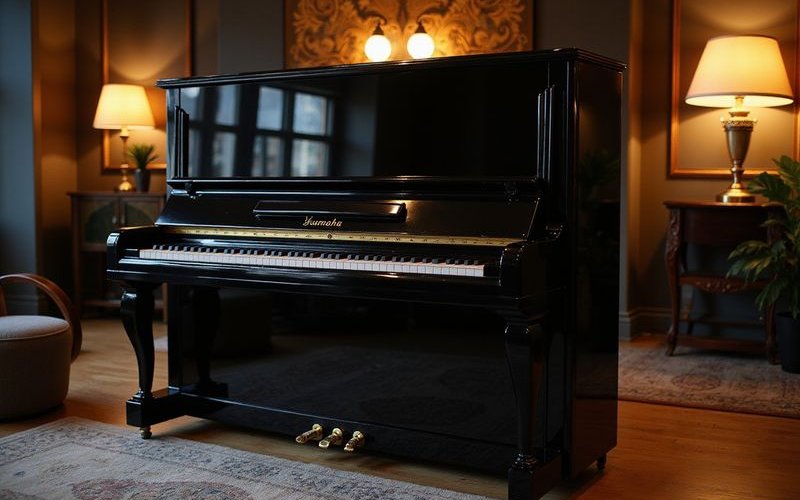
The “So What” Factor: The price difference often comes down to the country of origin. Instruments in this range, particularly from Yamaha and Kawai, are often manufactured in Japan rather than Indonesia or China.
At this price, you’re buying:
- Longer Strings: Taller cabinets (121cm+) allow for string lengths comparable to a baby grand.
- Advanced Actions: You get mechanisms designed for rapid repetition, essential for advanced repertoire.
- Resale Value: Models like the U1 hold their value exceptionally well in the private market.
Premium Uprights: £10,000 - £18,000
Serious enthusiasts often look to European-designed lines here. We frequently recommend exploring the C. Bechstein Academy series or top-tier Yamaha YUS models in this bracket. These pianos offer a tonal palette that rivals many grand pianos.
Baby Grand Pianos: £12,000 - £30,000
Stepping up to a grand piano changes everything about the playing experience.
A Critical Comparison: Wood vs. Composite
| Feature | Yamaha GB1K (~£11,000+) | Kawai GL-10 (~£10,500+) |
|---|---|---|
| Action Material | Traditional Wood | Millennium III (Carbon Fiber/ABS) |
| Benefit | Classic, familiar touch | Highly resistant to humidity changes |
| Warranty | 10 Years | 10 Years |
| Origin | Indonesia | Indonesia |
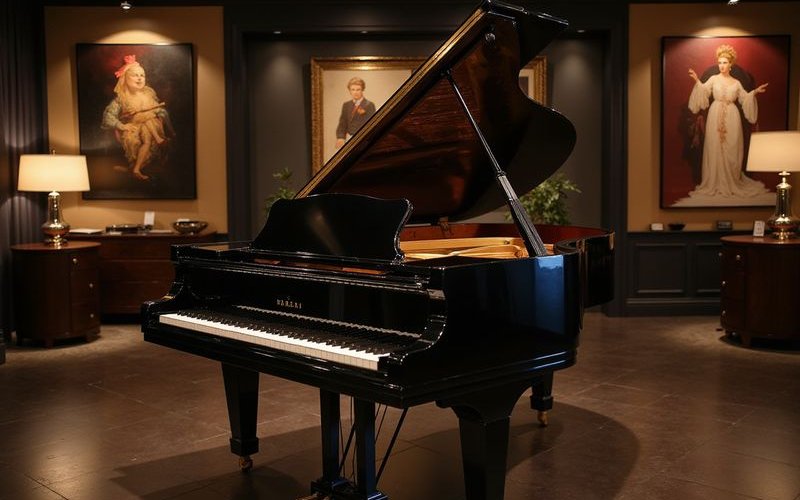
Insider Tip: Avoid any new grand piano shorter than 150cm (5ft). The bass strings are so short that a high-quality upright will almost always sound better and cost less.
Full-Size Grand Pianos: £25,000+
Once you pass the £25,000 mark, you enter the territory of concert-level instruments. Models from Steinway, Fazioli, and Shigeru Kawai in this range are handcrafted works of art designed for professional performance spaces.
Pre-Owned Piano Prices
The pre-owned piano market can be a goldmine if you know what to look for.
Pre-Owned Uprights: £800 - £5,000
We love the value proposition of older British pianos for casual players. Brands like Knight, Welmar, and Kemble (often made in the Yamaha factory) are robust and musically pleasing.
Typical Market Rates:
- Yamaha U1 (1980s era): £3,500 - £4,500.
- Restored British Upright (Knight/Welmar): £1,500 - £2,500.
- Budget Starter (various): £800 - £1,500.
Warning: Be very careful with “Grey Market” pianos imported directly from humid climates in Asia. These instruments may not have been “seasoned” for the drier UK environment, leading to loose tuning pins and cracked soundboards.
Pre-Owned Grands: £5,000 - £20,000
Depreciation works in your favor here. A high-quality baby grand that cost £15,000 new ten years ago might be available for £8,000 - £10,000 today.
What Affects Piano Prices?
Several technical factors drive the cost beyond just the brand name.
Silent Technology This is the biggest game-changer in 2026. Adding a factory-fitted silent system (like Yamaha’s SH3 or Kawai’s ATX4) typically adds £1,500 - £2,500 to the price. It allows you to play with headphones while keeping the real acoustic action.
Country of Manufacture Labor costs dictate pricing.
- China/Indonesia: Lower cost, mass-produced (e.g., Yamaha b series).
- Japan: Higher cost, higher precision (e.g., Yamaha U series).
- Germany/Europe: Premium cost, hand-crafted (e.g., C. Bechstein, Bösendorfer).
Cabinet Finish Polished ebony is the industry standard because it is the cheapest to produce in bulk. Walnut, mahogany, or white finishes are often special orders that can add 10-15% to the final bill.
Condition (Pre-owned) Internal wear matters more than external shine. A piano with worn hammer felts or loose tuning pins is a liability, even if the case looks brand new.
The Hidden Costs
You need to budget for the “cost of ownership,” not just the purchase price.
Professional Delivery Moving a piano is specialist work.
- Local Upright Move: £150 - £300.
- Local Grand Move: £300 - £600.
- Stairs: Expect to pay an extra £50 - £80 per flight.
- Our Policy: At Keys & Co., we include delivery within 30 miles.
Tuning & Maintenance Pianos are organic; they breathe and move.
- Standard Tuning: £80 - £110.
- Pitch Raise: £140 - £155 (required if the piano has been neglected).
- Frequency: New pianos need tuning 3-4 times in the first year as strings stretch.
Humidity Control (The Invisible Saver) We strongly recommend installing a Dampp-Chaser system if your home has underfloor heating or variable temperatures.
- Cost: Approx. £450 - £600 installed.
- Benefit: It prevents thousands of pounds in structural damage over the piano’s life.
Accessories Don’t forget the essentials. A quality adjustable stool (£150+), a metronome, and proper castor cups to protect your floor are standard add-ons.
What Should You Actually Spend?
Our team has broken this down based on player goals to help you budget effectively.
For beginners and casual players A reliable pre-owned British upright or a new entry-level model (£2,500 - £3,500) is ideal. This minimizes your financial risk while ensuring the instrument doesn’t hinder learning.
For serious students (Grades 5-8) You need an instrument with a responsive action.
- Budget: £5,000 - £9,000 (New) or £3,500+ (Used U1/K3).
- Why: A “mushy” action on a cheap piano will make advanced techniques like trills impossible to master.
For dedicated players with space If you have the room (and no underfloor heating issues), a grand piano offers a dynamic range an upright cannot match. Look for a pre-owned Japanese grand in the £10,000 - £15,000 range for the best value.
For professionals Premium uprights (£10,000+) or hand-built grands (£25,000+) are lifetime investments. At this level, you are paying for tonal color and artistic expression.
A Word of Caution
Be wary of deals that seem too good to be true.
- Online “Bargains”: Pianos on general marketplaces often have structural issues like cracked bridges that cost more to fix than the piano is worth.
- “Free” Pianos: You will often pay £300 to move it, only to find it cannot hold a tune.
- High-Pressure Sales: A piano is a 20-year commitment. Take your time to play multiple instruments.
The Bottom Line
You can find a fantastic instrument without breaking the bank if you focus on condition and pedigree rather than just brand prestige. We see clients every day who find joy in a well-prepped £3,000 upright that sounds better than a neglected £10,000 grand.
The smartest move is to play as many pianos as possible.
Visit our showroom to explore pianos across different price points, and we’ll help you find something that fits both your playing needs and your budget.
James Whitmore
James Whitmore is a qualified piano technician with over 20 years of experience. He founded Keys & Co. in 2018 to share his passion for helping people find the perfect piano.