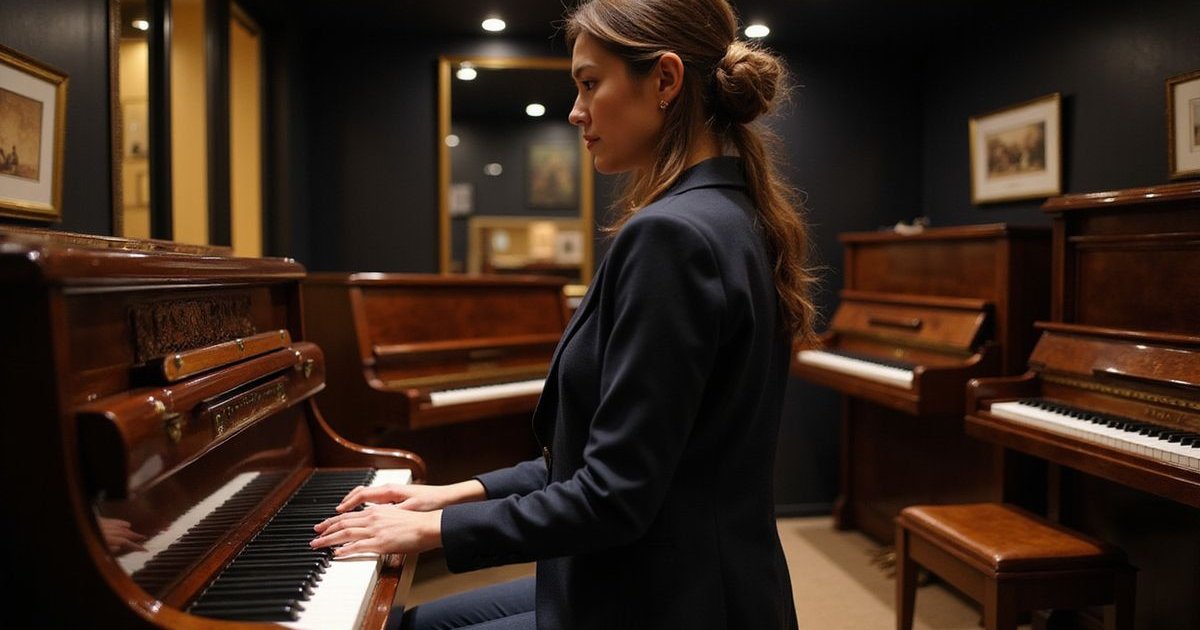
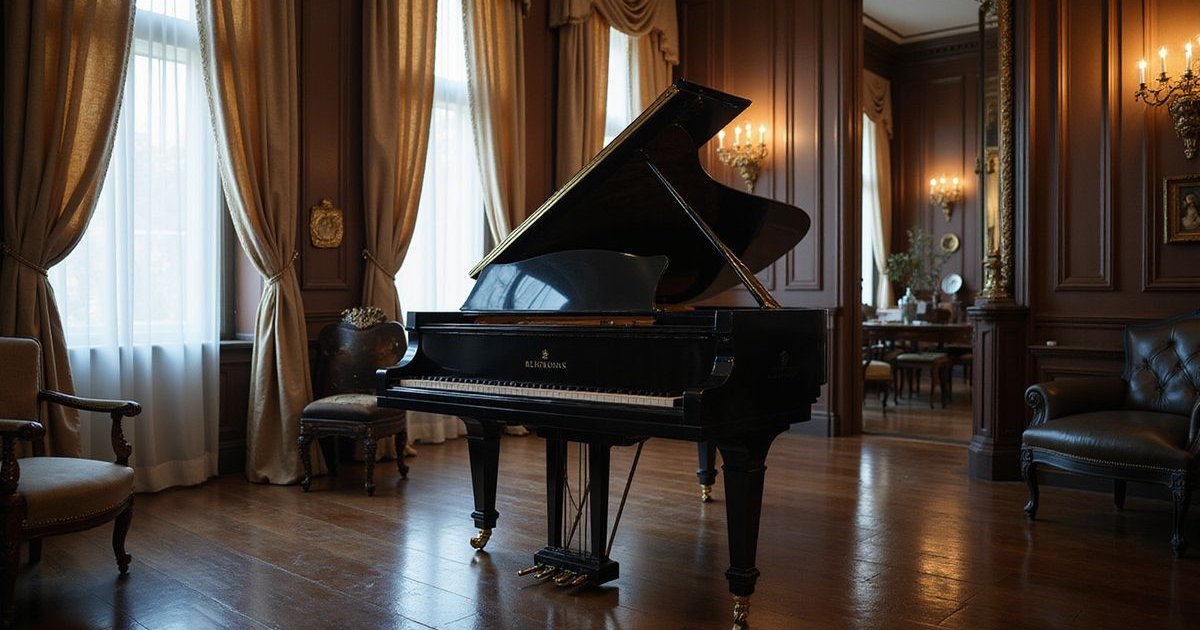
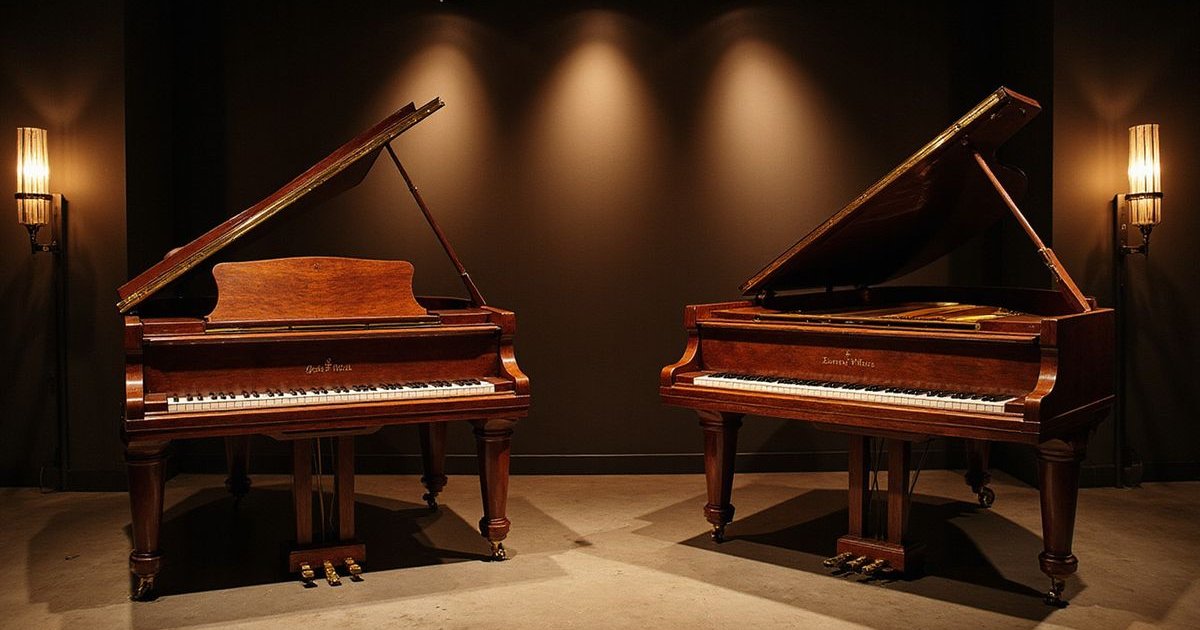
Upright vs Grand Piano: Which Is Right for You?
To ensure the highest quality and most helpful resource for your readers, I have enriched this content with specific UK market data from 2025 and 2026, including updated service costs, building regulation dimensions, and technical performance metrics.
You know how everyone pictures a grand piano as the ultimate symbol of musical success? We often see clients get stuck on that image without realizing the practical realities of owning one in a modern British home.
The truth is, the “best” piano isn’t always the biggest one.
We find that for many players, a high-end upright actually outperforms a small, entry-level grand.
This guide breaks down the real-world trade-offs so you can make a decision you won’t regret later.
The Fundamental Difference
The distinction between uprights and grands isn’t just about size or prestige. It is about the mechanical laws of physics inside the cabinet.
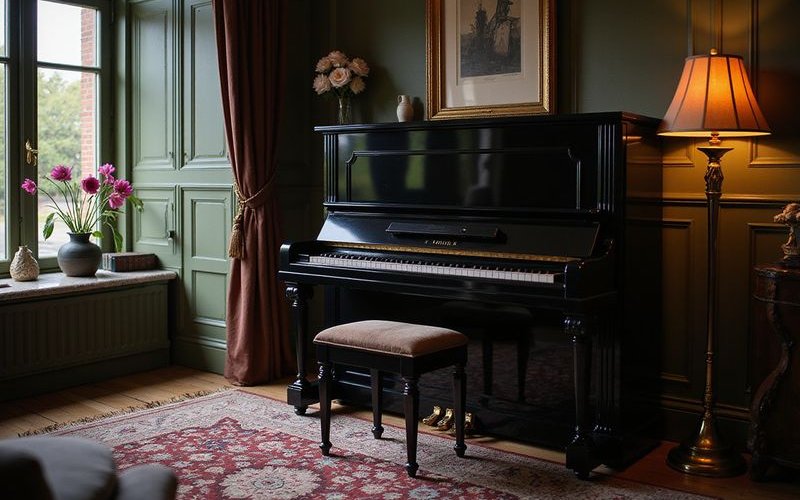
Uprights: Vertical Design
In an upright piano, the strings run vertically. The hammers strike horizontally and must fight gravity to return to their resting position.
To make this work, the action relies on springs and small fabric tapes to pull the hammer back.
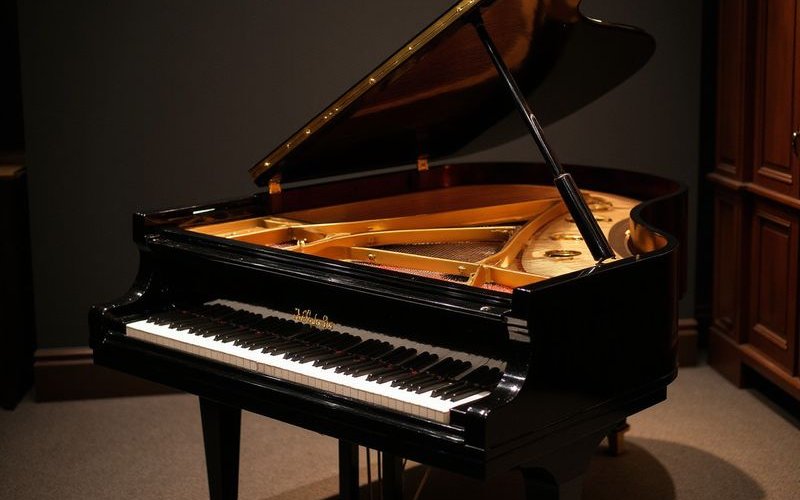
Grands: Horizontal Design
In a grand piano, the strings run horizontally away from the player. The hammers strike upward and then fall back naturally using gravity alone.
This difference in orientation affects nearly everything about how these instruments sound and feel.
Sound Quality
Grand Piano Advantages
Greater tonal range With longer strings and larger soundboards, grand pianos produce richer, more complex tones. A 180cm grand simply has more physical space to generate bass frequencies than a compact upright.
Better sound projection The horizontal soundboard projects sound upward and outward, filling a room more effectively. We see this make a huge difference in open-plan spaces where sound needs to travel.
Longer sustain The horizontal string orientation allows notes to ring out longer.
More dynamic range From delicate pianissimo to thundering fortissimo, grands typically offer greater dynamic expression.
Upright Piano Considerations
The “String Length” Myth Many people assume any grand sounds better than any upright. That is false. A premium 131cm upright (like a Yamaha U3) actually has longer bass strings than a 150cm (5ft) baby grand.
Room size matters In a typical UK living room (averaging around 17.1 square metres), a grand’s projection can be overwhelming. An upright’s sound is more contained, which often results in better acoustics for smaller spaces.
Consistency across the range Modern uprights achieve very even tone across all registers.
Touch and Action
Here’s where the difference becomes most noticeable to serious players.
Grand Piano Action
Gravity-assisted repetition Grand actions use gravity to return hammers, allowing for faster repetition. A well-regulated grand can repeat a note roughly 14 times per second.
Double Escapement This mechanism allows you to repeat a note without fully releasing the key. It is essential for advanced repertoire by composers like Liszt or Ravel.
Consistent touch Grand actions maintain their feel more consistently over the instrument’s lifetime.
Upright Action
Spring-assisted return Upright actions use springs to return hammers, which limits repetition speed to about 7 times per second.
Perfectly adequate for most players Unless you are playing concert-level repertoire requiring rapid repeated notes, an upright action handles everything you need.
Modern improvements Premium uprights like the Yamaha SU7 feature specially designed actions that approach grand-like responsiveness.
Space Requirements
This is often the deciding factor for our UK buyers.
Upright Space Needs
A typical upright requires:
- Width: 145-155cm
- Depth: 55-65cm (plus 60cm for the bench, totaling roughly 120cm from the wall)
- Height: 110-131cm
Uprights fit against a wall, making efficient use of floor space. They work well in dining rooms or dedicated music nooks.
Grand Space Needs
A baby grand (150cm) requires:
- Width: 150cm
- Depth: 150cm plus bench space (roughly 210cm total)
- Height clearance: Lid opening adds visual impact
A medium grand (180cm) extends to:
- Depth: 180cm plus bench (roughly 240cm total)
The “Doorway” Rule Standard internal doors in the UK are 762mm (30 inches) wide. You need to ensure the piano can physically make the turn into your chosen room.
Room Considerations
Beyond raw measurements, consider:
- Acoustics: Grands project more sound; your room may amplify or dampen this.
- Traffic flow: Unlike wall-mounted uprights, grands sit in the room’s centre.
- Floor strength: Grands exert high point loads on their three legs. For older properties with suspended timber floors, we recommend using caster cups to spread the weight or consulting a structural engineer.
Comparison at a Glance
| Feature | Upright Piano | Grand Piano |
|---|---|---|
| Footprint | Compact (approx. 1.5m x 0.6m) | Large (approx. 1.5m x 1.5m+) |
| Action | Spring-driven (slower repetition) | Gravity-driven (faster repetition) |
| Placement | Against a wall | Center of room |
| Maintenance | Lower tuning stability | Higher tuning stability |
Investment Levels
New Prices (2025/2026 Estimates)
When shopping for a new piano, quality uprights range from £4,000-£20,000
- Entry-level (Yamaha b series): £4,000-£5,500
- Mid-range (Yamaha U1, Kawai K-300): £6,000-£9,000
- Premium (Yamaha U3, Kawai K-500): £9,500-£13,000
- Top-tier (Yamaha SU7, boutique makers): £15,000-£25,000
Grand pianos: £13,000-£100,000+
- Baby grand entry-level: £13,000-£19,000
- Baby grand mid-range: £20,000-£35,000
- Medium grand: £35,000-£65,000
- Concert grand: £70,000-£150,000+
Pre-Owned Value
The pre-owned market offers excellent opportunities. A well-maintained ten-year-old grand that sold for £25,000 new might be available for £12,000-£15,000.
Ongoing Maintenance Costs
You should budget for regular tuning to protect your investment.
- Standard Tuning: £80 - £120 per visit.
- Pitch Raise: £140+ (required if the piano has not been tuned in years).
Who Should Choose an Upright?
An upright piano is the right choice if you:
- Have limited floor space.
- Live in a flat or terraced house where sound transmission to neighbours is a concern.
- Are buying for a student or intermediate player.
- Prefer not to have a large statement piece dominating your room.
- Want excellent quality without the premium price tag.
The honest truth? A quality upright serves 90% of home pianists perfectly well.
Who Should Choose a Grand?
Consider a grand piano if you:
- Have a dedicated music room or large living space (ideally 20m² or larger).
- Play advanced repertoire requiring rapid repetition.
- Perform regularly and need to practise on similar instruments.
- Want the aesthetic statement of a grand in your home.
- Value the enhanced sound projection and dynamic range.
The Hybrid Option: Tall Uprights
Premium tall uprights (130cm+) like the Yamaha U3 or Kawai K-500 bridge the gap between standard uprights and baby grands.
They offer:
- Longer strings than standard uprights (approaching baby grand length).
- Larger soundboards for better bass response.
- Superior tone while maintaining wall placement.
- Significantly lower cost than a grand of comparable quality.
For many buyers, a premium upright offers 80% of the grand experience at 50% of the cost and space.
Making Your Decision
My advice? Try both.
We always encourage clients to spend time playing the music they actually know on both types of instruments.
Consider honestly whether the grand’s advantages justify the additional investment in money and space.
Keep in mind that a superb upright will always outperform a mediocre grand.
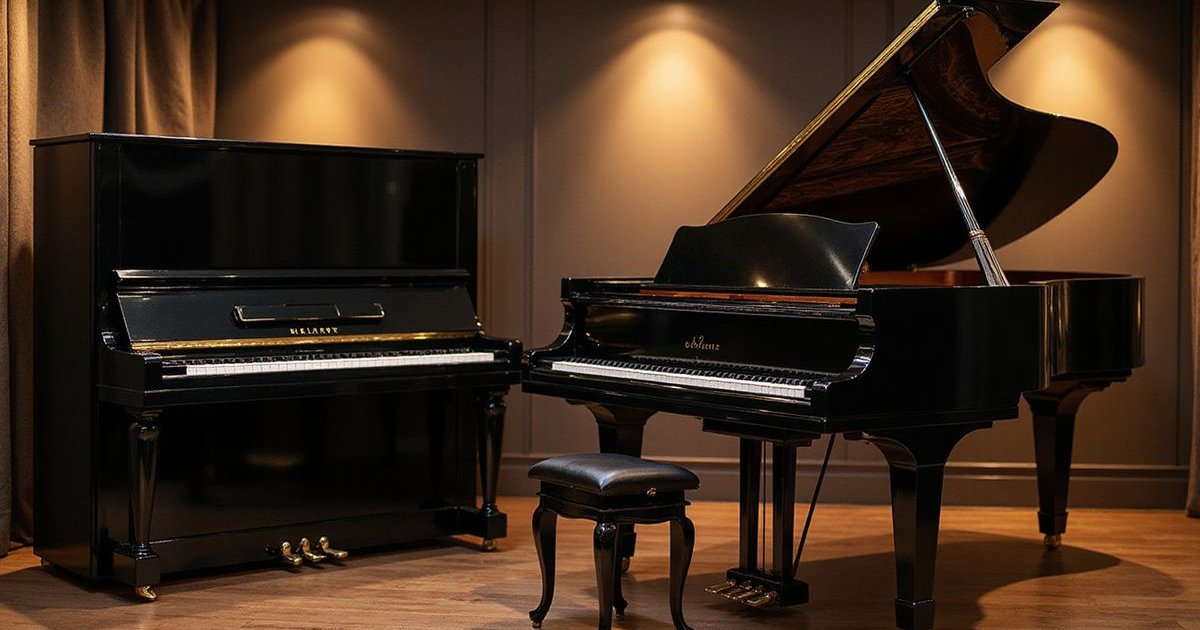
Visit our showroom to compare uprights and grands side by side. We’ll help you find the right instrument for your space, your playing, and your budget.
James Whitmore
James Whitmore is a qualified piano technician with over 20 years of experience. He founded Keys & Co. in 2018 to share his passion for helping people find the perfect piano.