Yamaha vs Kawai: Comparing Two Leading Piano Brands
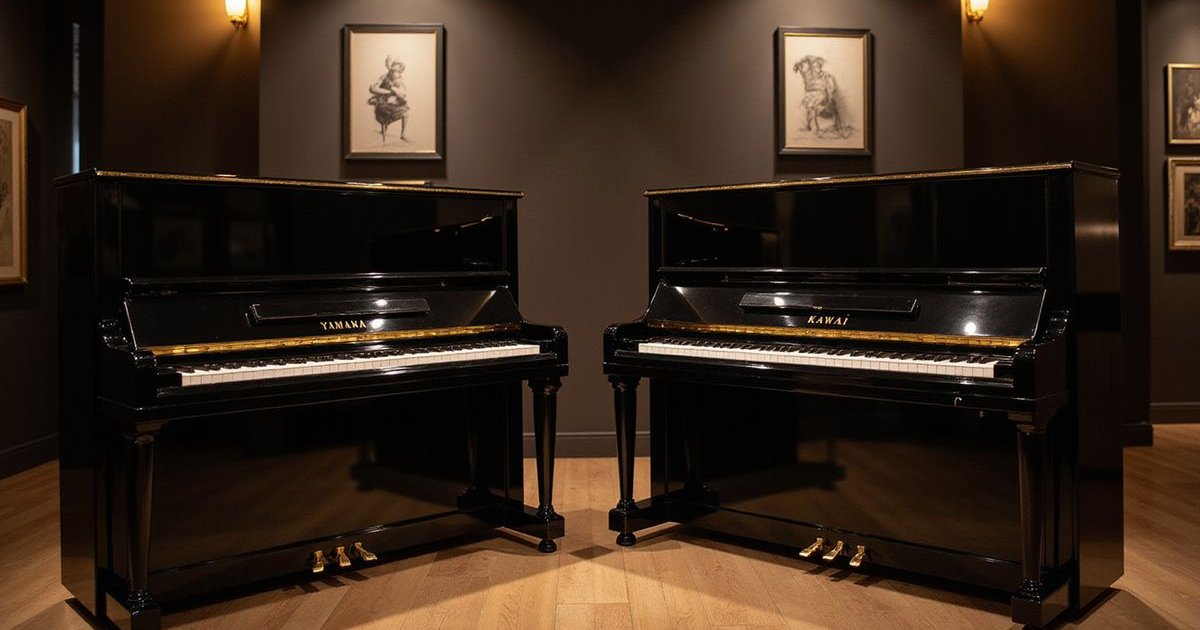
“Should I buy a Yamaha or a Kawai?” This question comes up constantly in our showroom. We hear it almost daily at Keys & Co. Both brands define the Japanese piano industry when it comes to new pianos. They are not identical. Understanding the specific mechanical and tonal differences helps you make the right choice for your home or studio.
Let me share what our team has learned from two decades of working with both brands.
Two Different Philosophies
Yamaha and Kawai approach piano-making with subtly different philosophies. These distinctions directly influence how their instruments sound and feel under your fingers.
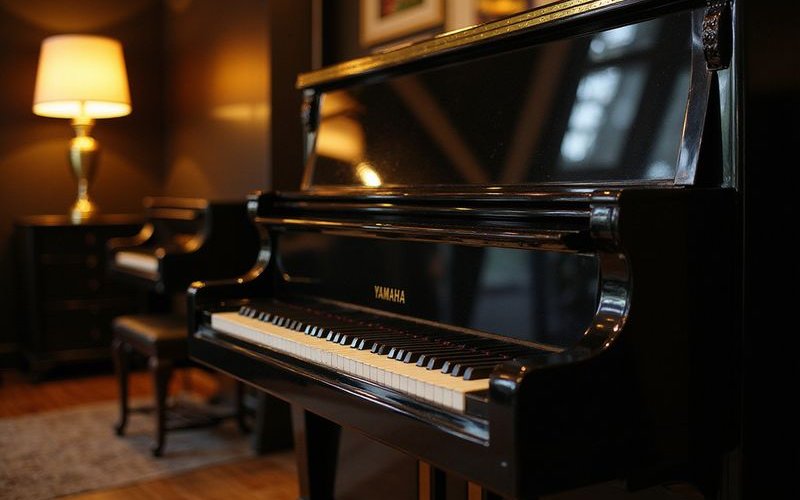
Yamaha’s Approach
Yamaha functions as the world’s largest piano manufacturer. They produce over 100,000 pianos annually. Their manufacturing philosophy centers on precision engineering and total consistency.
Bright, clear tone Yamaha pianos tend toward a brighter, more projecting sound profile. Notes are clear and well-defined. This makes them excellent for cutting through a mix in a jazz ensemble or pop setting.
Consistent quality Manufacturing at scale has allowed Yamaha to achieve remarkable consistency using their V-Pro (Vacuum Shield Mold Process) iron plates. Two U1 pianos coming off the production line will be virtually identical. You know exactly what you are getting with a new Yamaha.
Durability Yamaha pianos are resilient workhorses. They remain the standard instrument in music schools and conservatories. This preference exists because they handle heavy daily use and temperature fluctuations exceptionally well.
Resale value Strong brand recognition means Yamaha pianos hold their value better than most competitors. A well-maintained U1 can often retain 60% to 70% of its value after five years.
Kawai’s Approach
Kawai, though smaller than Yamaha, has been making pianos since 1927. The company takes a path defined by material science innovation.
Warmer, richer tone Kawai pianos generally produce a warmer, more mellow sound. There is often more tonal depth. This is particularly noticeable in the bass section of their uprights.
Innovation in materials Kawai has pioneered the use of composite materials in action components. Their Millennium III action uses ABS-Carbon. This material is lighter and stronger than traditional wood. It is also impervious to the humidity swings common in UK homes.
Touch emphasis Many pianists feel Kawai actions have a slightly more responsive, nuanced touch. The extended key length on models like the K-300 offers greater control for pianissimo passages in classical repertoire.
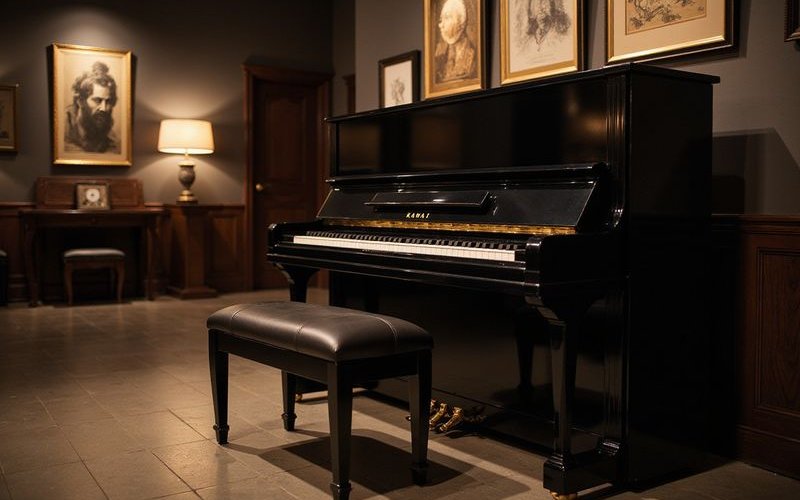
Comparing Key Models
Entry-Level Uprights
Yamaha b series (b1, b2, b3) Built in Indonesia, these are Yamaha’s most affordable uprights. We find them to be solid instruments for beginners who need reliability. They offer the signature Yamaha clarity at accessible prices, starting from around £3,500.
Kawai K-15E / K-200 Kawai’s entry-level uprights offer good value with that characteristic warmer tone. The K-200 is particularly notable. It features the Millennium III action and is built in Japan. Prices typically start from around £3,800.
Mid-Range Uprights
This category is where both brands truly excel. Most serious buyers should focus their search here.
Yamaha U1 (121cm) This is perhaps the most popular upright piano in the world. It delivers a bright, clear, and reliable performance. The U1 serves as the benchmark against which other uprights are judged. New models cost around £9,000 depending on the retailer.
Kawai K-300 (122cm) Kawai’s direct competitor to the U1 offers a compelling alternative. It features a slightly larger soundboard and the Millennium III technology. You can typically find these for around £6,500 to £7,000.
Comparison Table: Yamaha U1 vs. Kawai K-300
| Feature | Yamaha U1 | Kawai K-300 |
|---|---|---|
| Height | 121 cm | 122 cm |
| Action Material | Traditional Wood / Resin | ABS-Carbon Composite |
| Tone Profile | Bright, Clear, Projecting | Warm, Mellow, Full |
| Soft-Close Fallboard | Standard | Standard |
| Country of Origin | Japan | Japan / Indonesia (Check Serial) |
Yamaha U3 (131cm) A larger cabinet means longer strings and a bigger soundboard area. The U3 offers more bass depth and tonal complexity than the U1. Expect to pay around £10,500 for a new model.
Kawai K-500 (130cm) Kawai’s larger upright competes directly with the U3. It features Neotex key surfaces which simulate the feel of natural ivory and ebony. The bass response is particularly impressive. These generally retail around £8,500.
Grand Pianos
Both manufacturers produce excellent grands across all sizes.
Yamaha C series (C1-C7) These instruments are bright, powerful, and consistent. They are a staple in teaching studios and smaller concert venues across the UK. The baby grand (C1X) starts from around £20,000.
Kawai GX series These grands offer a warmer, more intimate tone. The Millennium III grand action is particularly well-regarded for its repetition speed. The baby grand (GX-1) typically starts from around £18,000.
Sound Differences
The tonal differences between Yamaha and Kawai are real. However, they are matters of taste rather than objective quality.
Yamaha sound characteristics:
- Brighter, more brilliant tone.
- Clear note definition.
- Excellent projection.
- Often described as “sparkly” in the treble.
Kawai sound characteristics:
- Warmer, more mellow tone.
- Richer bass response due to different hammer felt density.
- More tonal complexity.
- Often described as more “singing” or dark.
Neither is objectively better. Your choice depends on your musical preferences and playing style.
Touch and Action
Both manufacturers produce excellent actions. They feel distinct under the hand.
Yamaha actions These tend to be slightly heavier and incredibly consistent. They reward a clean, deliberate technique. We find they are forgiving of minor inconsistencies in finger work.
Kawai actions The Millennium III technology makes these actions feel slightly lighter and more responsive. They allow for more tonal shading. The trade-off is that they may reveal technical inconsistencies more readily than a Yamaha.
Many classical pianists prefer Kawai actions for their expressiveness. Jazz and contemporary players often prefer Yamaha for their reliability and punchy attack.
Build Quality and Durability
Both brands build exceptionally reliable instruments. There are specific structural differences worth noting.
Yamaha This brand is known for incredible durability. Their instruments handle heavy use and neglect better than most. Yamaha uses a “Seasoned for Destination” process. This means the wood is dried specifically for the humidity levels of the target market, such as Europe.
Kawai Kawai is also very reliable. Their advantage lies in the resistance to environmental changes. The ABS-Carbon action components do not swell or shrink with humidity fluctuations. This stability is a major benefit in the variable British climate.
Value and Pricing
Kawai generally offers slightly more aggressive pricing than Yamaha. This is particularly true in the mid-range market. A new Kawai K-300 typically costs £1,500 to £2,000 less than a comparable new Yamaha U1.
Yamaha pianos tend to hold their value better on the pre-owned market. The strong brand recognition makes them easier to sell privately later.
Pre-Owned Considerations
Both brands are excellent choices when buying used.
Pre-owned Yamaha There is a huge selection available in the UK. The U1 and U3 are particularly sought-after. Look for Japanese-made instruments from the 1980s to the 2000s. Be cautious of “grey market” imports that were not seasoned for the European climate, as they can suffer from loose tuning pins.
Pre-owned Kawai These often represent better value than Yamaha on the secondary market. You can get a newer piano for the same price. Avoid very old instruments (pre-1985) with wooden action components. The K-2 and K-3 series are particularly good value finds.
Which Should You Choose?
Choose Yamaha if you:
- Prefer a bright, clear, projecting tone.
- Play contemporary music or jazz.
- Need to cut through in ensemble settings.
- Value consistency and durability above all.
- Want maximum resale value.
Choose Kawai if you:
- Prefer a warmer, more mellow, singing tone.
- Play primarily classical repertoire.
- Value a responsive, nuanced touch.
- Want excellent value for money.
- Prioritize stability in humid environments.
The Honest Answer
The best advice I can give? Play both. The differences are real but subtle. Personal preference matters more than specification sheets.
Spend an hour with a Yamaha U1 and a Kawai K-300 side by side. Play the music you actually play. Trust your ears and your fingers.
Both are excellent instruments from respected manufacturers. You will not make a bad choice. You will simply make a choice that is better suited to your particular preferences.
Visit our showroom to compare Yamaha and Kawai pianos in person. We are authorised dealers for both brands and can help you find the right instrument for your needs.
James Whitmore
James Whitmore is a qualified piano technician with over 20 years of experience. He founded Keys & Co. in 2018 to share his passion for helping people find the perfect piano.